Short Answer
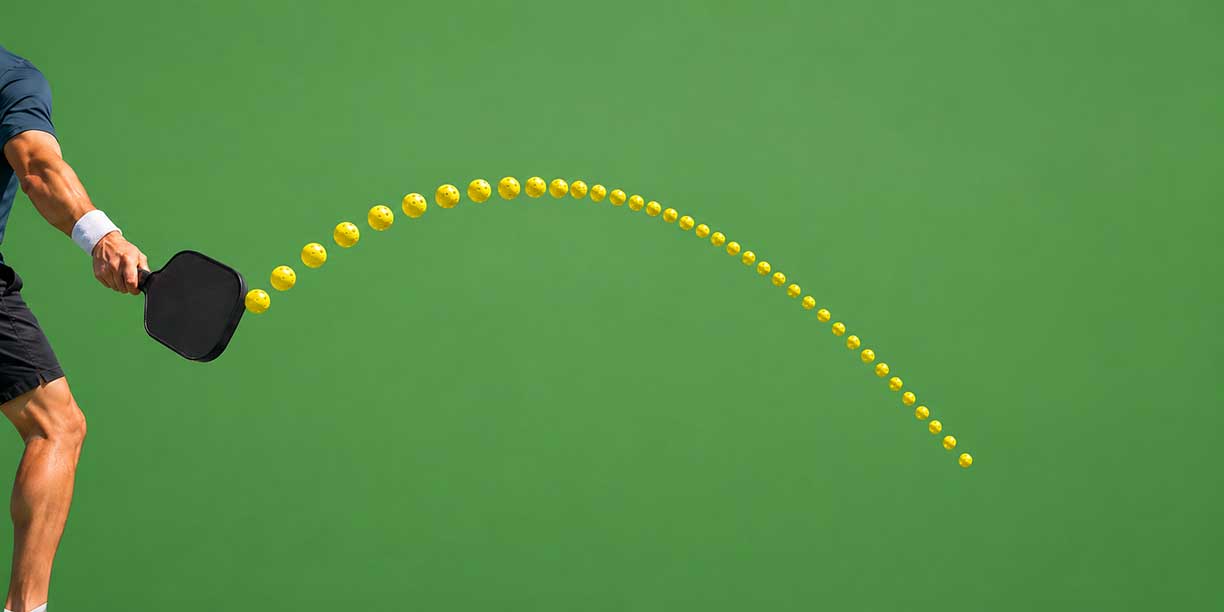
After you hit the pickleball, you do not need to intensely watch where it goes. The ball has already left the paddle, and no amount of looking after it will change its path. From the Fluid Motion Factor perspective, it is often more useful to stay with the pause and the feeling of contact for a moment. This helps you fully receive the ball, preserve soft eyes, and avoid letting the mind rush toward the target too early. On very fast kitchen exchanges, the idea changes slightly: keep a wide field of vision so your shot, your opponent’s paddle, and the next ball all stay visible together.
The Ball Has Already Been Hit
One of the strangest habits in pickleball is the way players sometimes chase the ball with their eyes after contact, as if additional looking might somehow improve the shot.
The ball leaves the paddle.
Then the eyes go after it.
The head turns. The body pulls up. The mind follows the ball like a worried parent following a teenager’s car out of the driveway.
But by then, the important part is over.
The ball has already been hit.
No amount of staring after it will change its direction, speed, height, spin, or depth. Once the ball is gone, it has received its instructions from the paddle, for better or worse, and is now living its own little airborne life.
From the Fluid Motion Factor point of view, the more important question is not, “Where did it go?” but “Were you fully present at contact?”
That is where the shot is made.
Not after.
The Mind Wants to Leave Early
Many players do not actually lose the ball after contact.
They lose the ball before contact.
The mind starts looking ahead. It wants the target. It wants the result. It wants to know whether the shot is good, whether the opponent is in trouble, whether the partner is impressed, whether the ball is going out, and whether the whole enterprise can now be judged as success or failure.
This is the mind’s natural habit. It is always trying to get to the next thing.
In pickleball, that habit can cause trouble.
The player may still be physically looking at the ball, but mentally, the player has already moved to the target. The attention has left contact. The eyes have started to harden. The body starts to steer the shot.
This is why “watch the ball” is sometimes not enough.
A player can appear to be watching the ball while still being more interested in where the ball is going than in receiving the ball itself.
That is a subtle but important difference.
Soft Eyes Do Not Chase the Result
Soft eyes are not just about seeing the ball.
They are about the quality of seeing.
Hard eyes grab. Soft eyes receive.
Hard eyes stare at the ball, then chase the result. Soft eyes let the ball arrive, let contact happen, and allow the court to remain present.
When players intensely follow the ball after they hit it, they often break the soft eyes state. The eyes narrow toward the ball’s flight. The head turns too quickly. The mind moves into outcome mode.
Did I make it?
Is it deep enough?
Will they attack?
Was that too high?
Is my partner quietly judging the life choices that led to that dink?
Now the player has left the moment of contact and entered the review booth.
The next ball has not even been struck yet, but the mind is already busy with consequences.
Soft eyes work better when attention stays quieter and wider. You do not need to stare after the ball. You need to remain available to the next event.
The Pause Helps You Stay With the Hit
This is where the pause becomes useful.
The pause is that tiny moment of inner stillness before and through contact. It is not a freeze. It is not hesitation. It is not standing there like a museum exhibit while the point continues.
It is a small settling.
You let the ball arrive.
You meet it.
You stay with contact.
That last part matters.
If your eyes and mind leave too early, you may never fully experience the hit. You may be so interested in where the ball is going that you miss the quality of contact itself.
The pause helps prevent that.
It keeps you with the ball long enough to actually receive it. It gives the body a better chance to organize timing, touch, paddle face, and rhythm.
The cue is simple:
Stay with the hit.
Not forever.
Just long enough to avoid rushing ahead.
Leaving Your Eyes There Gives You a Better Look at the Ball
It may sound backward, but one of the best ways to see the ball better is not to chase it after contact.
Instead, let your attention stay at the contact zone for a beat.
This helps you see the ball more fully before and during the hit. It discourages the mind from jumping to the target too soon. It also keeps the head and upper body quieter, which can improve timing and touch.
Many missed shots happen because the player’s attention is already leaving before the paddle has finished meeting the ball.
The body is still hitting.
The mind is already looking for the result.
That split creates a kind of small internal leak.
The pause seals the leak.
You see the ball.
You receive it.
You meet it.
You stay there for a fraction.
Then the point continues.
You Will Still Know Where the Ball Went
One objection is obvious:
“But don’t I need to know where the ball went?”
Yes, of course.
This is pickleball, not a trust fall.
But you do not need to track the entire outgoing flight with intense visual concern. In most cases, you will have ample time to understand where the ball went before you need to respond to the next shot.
The opponent has to receive it.
The opponent has to hit it.
Then the next ball has to come back.
That gives you time to reestablish the court picture.
You are not closing your eyes. You are not ignoring the point. You are simply refusing to yank your awareness away from contact too early.
After your hit, you can let the eyes return naturally to the court and opponent. You do not have to chase the ball like a detective pursuing a suspect through an airport.
You will know enough, soon enough.
Rapid Kitchen Exchanges Are a Little Different
There is one situation where this idea needs a small adjustment: rapid exchanges from kitchen line to kitchen line.
When the ball is moving quickly between players at the non-volley zone, you do not want to leave your eyes at the contact point in a way that makes you late to the next shot. The game is too fast there. Balls are being blocked, countered, redirected, and sometimes fired back with the emotional subtlety of a garage door spring.
But the solution is not to stare harder or chase the ball with narrow focus.
The solution is to keep a wide field of vision.
At the kitchen, both your shot and your opponent’s response are usually visible inside the same visual field. You can see your paddle, the ball, the net, the opponent’s paddle, and the likely return without whipping your head around or visually grabbing at the ball.
That is where soft eyes become especially useful.
With soft eyes, you do not have to choose between seeing contact and seeing the next ball. The whole exchange stays available. Your shot, the opponent’s paddle, and the return can all be seen from start to finish because the distances are short and the field is compact.
So the kitchen-line version of the cue is slightly different:
Stay wide.
Or:
Soft eyes through the exchange.
You are not freezing your gaze at contact. You are also not chasing the ball anxiously after you hit it. You are keeping the entire little battlefield in view.
That lets the body respond quickly without the mind grabbing the steering wheel.
In other words, on slower shots, stay with the hit a fraction longer. On fast kitchen exchanges, keep the visual field wide enough that contact and response are both included.
Same principle.
Less chasing.
More receiving.
Watching the Target Can Steal the Ball
Another problem is that players often start looking at the target before they have finished receiving the ball.
This is especially common on shots where the player has already decided what to do.
A put-away.
A return.
A serve.
A dink to a specific spot.
A third-shot drop.
The player sees the target and becomes fascinated by it. The target starts pulling attention away from the ball. Then the body begins steering.
The result is usually less natural movement.
The paddle gets guided instead of released.
The hand tightens.
The eyes narrow.
The shot gets pushed, poked, or pulled.
In FMF language, the mind has become more interested in the outcome than the event. The ball is no longer being fully acknowledged. It has become merely a delivery vehicle for the player’s intention.
But pickleball shots are not made at the target.
They are made at contact.
The target matters, but it should not steal the ball.
Contact Is Where the Shot Lives
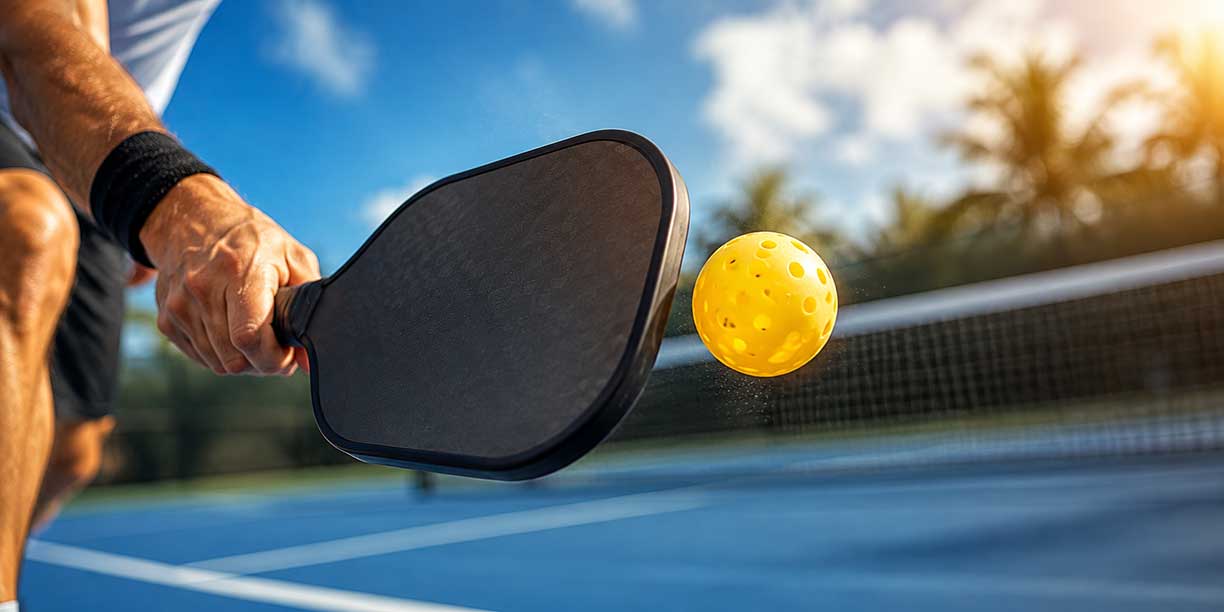
The ball’s future is decided at contact.
That is the little doorway through which everything passes: angle, height, pace, touch, spin, depth, and direction.
There is nothing you can do to affect where the ball goes by watching its flight. All of that is determined by the hit. That is where your full attention needs to go.
If your attention is there, your body has more access to the information it needs.
If your attention has left early, the contact often becomes less clean.
This is why the pause is such a useful cue. It brings the player back to the one place that matters most.
Not the target.
Not the outcome.
Not the opponent’s future reaction.
Contact.
The shot lives there.
And then it is gone.
A Simple Practice Cue
Here is a simple way to practice this idea.
During dinks, drops, resets, or volleys, use this rhythm:
See. Pause. Hit. Stay.
The “stay” is tiny. It does not mean you keep your head down forever or refuse to look at the court. It means you do not immediately chase the outgoing ball with your eyes and mind.
You stay with contact long enough to feel the shot.
Then you let the court return.
Another cue is:
Hit, then receive again.
That reminds you that the point is not finished when you hit the ball. Your job is to return to readiness, not to admire, judge, or worry about the shot.
For fast kitchen exchanges, use a different practice rhythm:
Wide. Contact. Wide.
That means you keep the whole exchange in view. You see the ball into your paddle, but you also keep the opponent’s paddle and the return path inside your awareness. The goal is not to pin your eyes down. The goal is to keep them from becoming narrow and panicked.
This Is Especially Useful on Touch Shots
This idea matters most on shots that depend on touch.
Dinks.
Drops.
Blocks.
Resets.
Soft volleys.
On these shots, watching the result too early can make the hand tighten. The player becomes eager to see whether the shot worked, and that eagerness can pull the body out of the hit.
A dink needs patience.
A reset needs absorption.
A drop needs feel.
A block needs quiet.
All of them benefit from staying with the ball a fraction longer.
The softer the shot, the more damaging it can be when the mind races ahead.
It Also Helps Under Pressure
Pressure makes the player care about the result.
That is natural.
At 10-10, the mind wants to follow the ball because the ball carries consequence. It may determine the point, the game, the match, the emotional weather in the car ride home, and possibly the meaning of existence.
This is exactly when the pause matters.
When the score gets tight, do not chase the outcome.
Stay with the hit.
Soft eyes.
Pause.
Contact.
Then recover.
At the kitchen line, use the wider version:
Soft eyes.
Wide field.
Contact and response together.
The more the mind wants to leap forward, the more useful it is to stay with what is actually happening.
The Goal Is Not to Look Down Forever
This should not become another rigid rule.
The point is not to glue your eyes to the contact point like a person trying to solve a stain on the carpet.
Pickleball is still a moving game. You need awareness of the opponent, partner, court, and next ball.
The goal is simply to stop leaving too early.
You stay with the hit long enough to preserve soft eyes and clean contact. Then your awareness opens again.
On slower shots, that may mean lingering at contact for a tiny fraction.
On fast kitchen exchanges, it means keeping the field wide enough that you see both the hit and the return without visually chasing either one.
That is different from staring after the ball.
It is also different from freezing.
It is a rhythm:
Receive.
Hit.
Stay.
Open.
Or, at the kitchen:
Wide.
Receive.
Respond.
Wide.
That rhythm helps keep the body organized and the mind from lunging toward the result.
A Better Kind of Seeing
Players often think better seeing means more intense looking.
FMF suggests a different idea.
Better seeing often comes from less grabbing.
When you stop chasing the outgoing ball, you may actually see the incoming ball better. You stop being so target-hungry. You stop letting the mind leave the shot early. You allow the body to stay in the moment where the paddle and ball meet.
No amount of looking after the shot changes where it goes.
But staying with the hit can change the quality of the shot before it leaves.
At the kitchen line, no amount of frantic eye-snapping makes the next ball easier to handle. But keeping a wide field of vision can let you see the whole exchange as one event.
Your paddle.
Their paddle.
The ball.
The space.
The next contact.
That is a better kind of seeing.
The Real Lesson: Stay With the Ball Until It Becomes the Shot
The ball deserves your attention before and through contact.
After that, it no longer needs your supervision.
It has already been hit.
You will know where it went soon enough. You will see what the opponent does. You will recover into the next position. You will reenter the court picture.
But if you leave too early, you lose something more important than ball flight.
You lose contact.
You lose softness.
You lose the pause.
You lose the chance to fully receive the ball.
So the next time you play, try this:
Do not rush your eyes to where the ball is going.
Let the ball arrive.
Find the pause.
Stay with the hit.
Then open back to the court.
And when the rally speeds up at the kitchen, do not stare harder. Stay wider.
Let your shot and the opponent’s shot live in the same field of vision.
The shot has already gone.
But the quality of your attention before it went may be the thing that makes it better.
FAQ:
Should I watch where the pickleball goes after I hit it?
You do not need to intensely track the ball after contact. The ball has already been hit, and watching it more will not change the shot. It is often more useful to stay with the hit for a fraction of a moment, then reopen your awareness to the court.
Why is watching the ball after contact a problem?
It can pull your eyes and mind toward the result too early. That can break soft eyes, encourage target-fixation, and make the body rush or steer the shot instead of fully receiving the ball at contact.
What about fast kitchen exchanges?
Fast kitchen exchanges need a slightly different treatment. Instead of leaving your eyes at contact too long, keep a wide field of vision. At the kitchen line, your paddle, the ball, the opponent’s paddle, and the return are usually close enough to stay visible together.
Does this mean I should never look at my shot?
No. You still need awareness of the point. The idea is not to ignore the ball, but to avoid chasing it too intensely after contact. Stay with the hit briefly, then let your eyes return naturally to the court and opponent.
How does the pause help with this?
The pause keeps your attention at the moment of contact. It helps you stop rushing toward the target or outcome. From the FMF perspective, the pause gives the body time to organize timing, touch, and paddle face before and through the hit.
Will I miss important information if I don’t follow the ball?
Usually not. In most situations, there is enough time to understand where your shot went and prepare for the next ball. In rapid kitchen exchanges, you solve this by keeping soft eyes and a wide visual field, so the whole exchange stays available.


0 Comments